Module 1: Foundations of User Experience (UX)
1. The Strategic Core: Beyond the Interface
User Experience (UX) is the architectural logic and emotional resonance of a system. While UI (User Interface) focuses on the "Skin," UX focuses on the "Skeletal Integrity."
The Architectural Analogy:
In a house, the UI is the paint, the marble countertops, and the designer lighting. The UX is the fact that the light switch is exactly where your hand expects it to be in the dark, and the hallway is wide enough to move furniture through.
Case Study: The Unit Economics of the Ketchup Bottle
- The Glass Era (UI First): Aesthetic and premium, but required a high Cognitive Load to use (hitting the glass, using a knife).
- The Inverted Squeeze Era (UX First): Based on the Jobs to be Done framework—gravity-fed, squeezable, and zero-waste. This shift didn't just improve feel; it increased consumption and brand loyalty.
2. The Execution Framework: Design Thinking
To build high-value products, we use the Design Thinking Process—a non-linear, 5-stage loop designed to eliminate Guesswork from the production cycle.
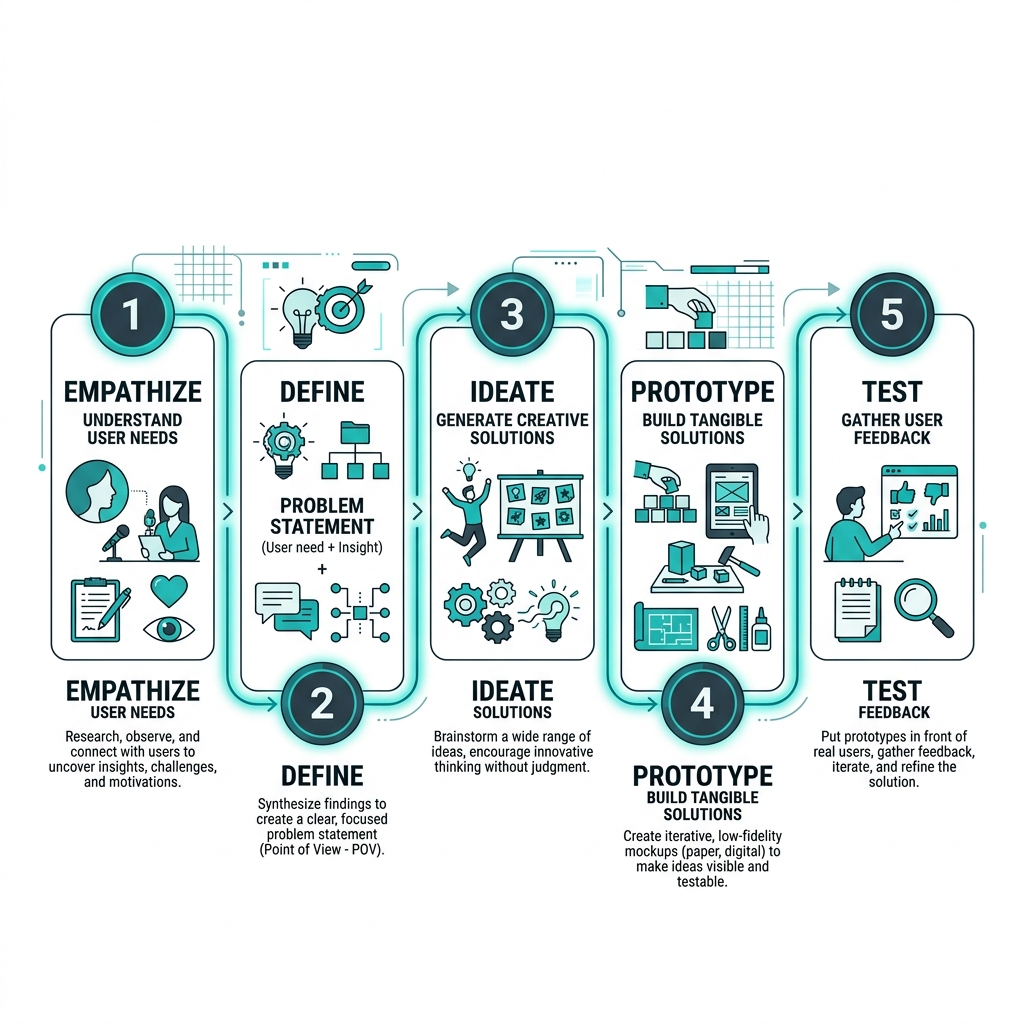
Figure 1: The Iterative Design Thinking Loop — Moving from Empathy to Validation.
- Empathize: Deep-dive research into user behavior (The Why).
- Define: Synthesizing data into a Problem Statement.
- Ideate: Divergent thinking to generate high-volume solutions.
- Prototype: Low-fidelity Sacrificial Concepts for rapid testing.
- Test: Convergent validation to find the Winning architecture.
3. The Value Pillars: The UX Honeycomb
What makes an experience Good? Peter Morville’s UX Honeycomb provides a multi-dimensional checklist for architectural success.

Figure 2: The 7 Pillars of Value — A checklist for architectural integrity.
A product must not only be Usable, it must be Credible (can I trust this bank app?) and Accessible (can a visually impaired user navigate this?). If any hexagon is missing, the total value of the Honey (the product) drops.
4. Designing with Logic: The Laws of UX
We don't design based on opinion. We design based on Human Psychology.
| Principle | The Logic | Real-World Application |
|---|---|---|
| Hick’s Law | Decision time increases with complexity. | Why a FireStick remote has only 5 buttons vs. a TV remote with 50. |
| Fitts’s Law | Speed is a function of target size/distance. | Why critical actions like Checkout are large, bottom-anchored buttons. |
| Jakob’s Law | Users expect your site to work like others. | Why the Cart icon is always in the top right. Don't reinvent the wheel. |
5. High-Stakes Comparison: Good vs. Bad UX
Small architectural choices have massive business impacts. The difference between a 2% and 10% conversion rate often lies in Reducing Cognitive Load.
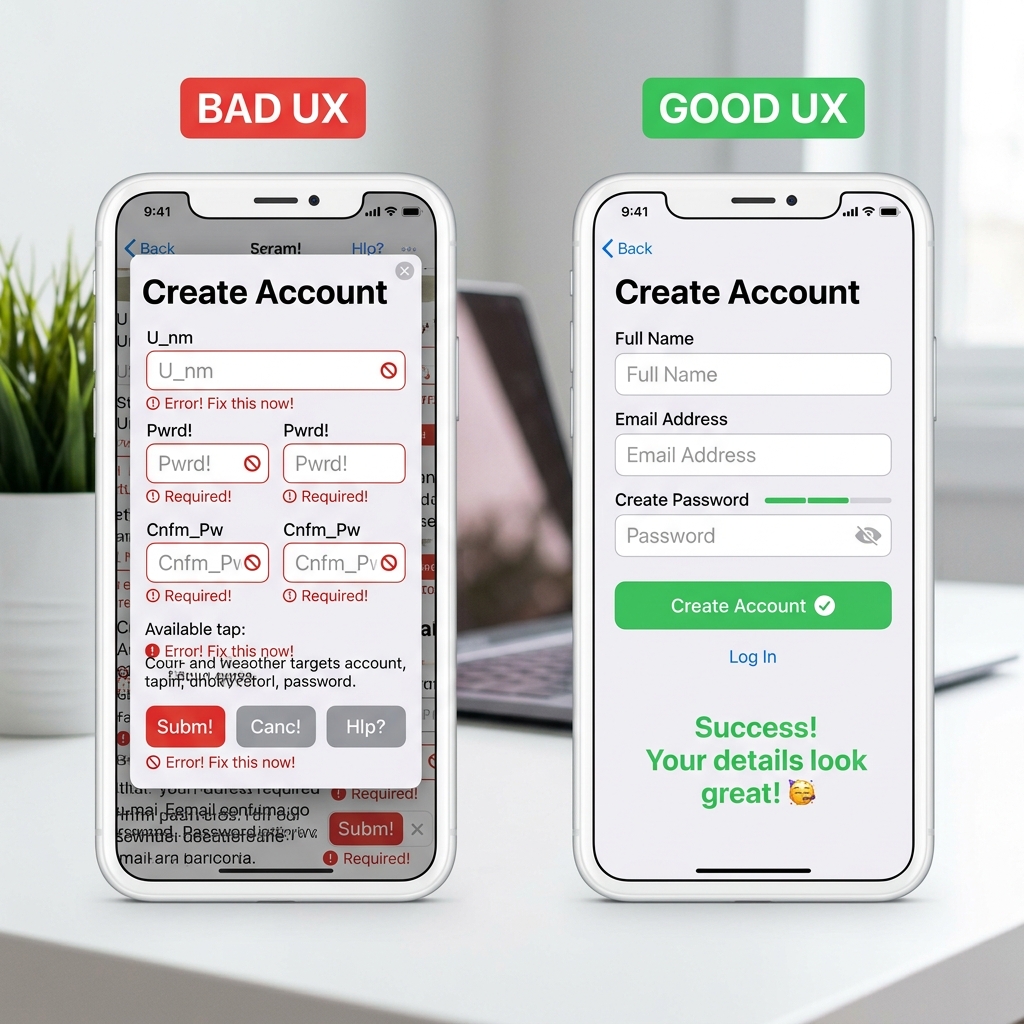
Figure 3: Reducing Friction — How clear hierarchy and feedback loops transform the user journey.
The Red Flags of Bad UX:
- Clutter: Asking for too much information at once.
- Silence: No success/error feedback after a user takes an action.
- Friction: Tiny touch targets that lead to Fat Finger errors.
6. Summary Checklist
[ ] Can I explain the ROI of UX to a stakeholder?
[ ] Have I identified the Diamond phase of my current project?
[ ] Is my interface respecting Jakob's Law, or am I confusing the user?
[ ] Does my design pass the Accessibility pillar of the Honeycomb?
🚀 Next Steps
In Module 2, we will dive into User Research Methodologies—learning how to conduct 1-on-1 interviews and build Personas that represent real behavioral data, not just demographic guesses.